Buying guide
Mosquito mesh for aluminium windows and doors: which type to choose
Fresh air without mosquitoes is a must in North India, especially through the monsoon and the dengue season. The best time to plan insect mesh is when you choose the windows, because the right mesh type depends on how the window opens.
Mesh types
| Type | How it works | Best with |
|---|---|---|
| Sliding mesh | A mesh panel on its own track. | 3-track sliding windows and doors. |
| Fixed mesh | A frame fixed over the opening. | Windows you open for air but rarely reach through. |
| Hinged mesh | A mesh frame that opens like a shutter. | Casement windows and doors. |
| Pleated mesh | Folds like an accordion and slides sideways; almost invisible when open. | Doors, outward-opening casements, wide openings. |
| Roller mesh | Rolls up into a cassette, like a blind. | Windows where you want the mesh out of sight. |
| Magnetic / velcro | A DIY mesh stuck to the frame. | A quick, cheap fix; not as durable. |
Matching mesh to the window
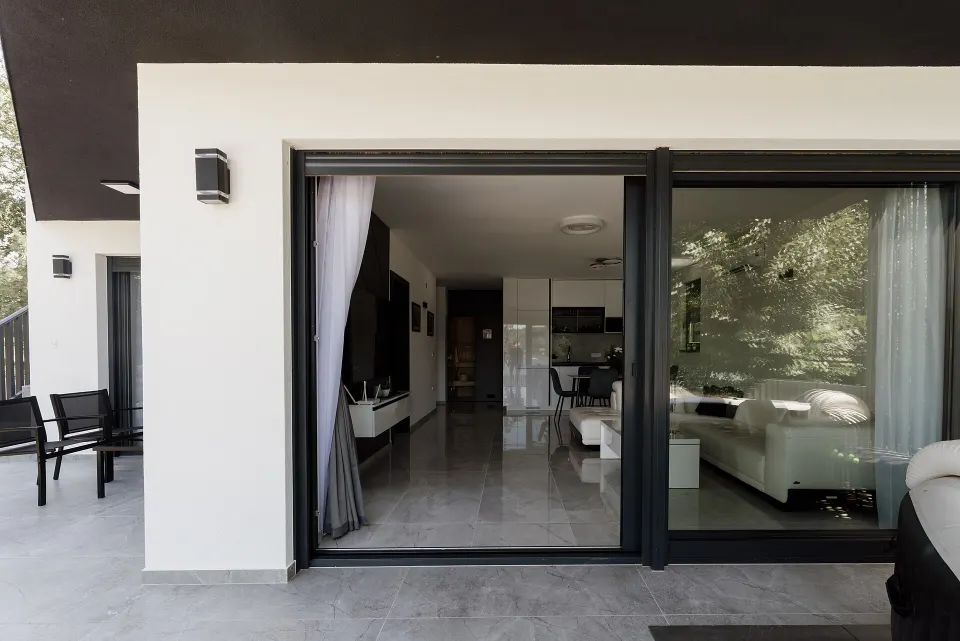
- Sliding windows: the neatest option is a 3-track frame, with the mesh on the third track.
- Outward-opening casements: the mesh has to go inside, so use pleated, roller or hinged mesh.
- Inward-opening and tilt-and-turn: the mesh goes outside, usually fixed.
- Big patio doors: pleated mesh, which doesn't need a high bottom track to trip over.
Mesh materials
- Fibreglass: the most common; good visibility, doesn't rust, can tear with rough use.
- Stainless steel (SS 304): strong, pet-resistant, long-lasting; costs more.
- Aluminium mesh: in between; can dent.
- Pleated polyester: used in pleated systems; flexible.
Tips
- Darker mesh (black or grey) is less visible from inside than light mesh.
- Make sure the mesh frame seals against the window frame; mosquitoes find any gap.
- Clean mesh gently with a soft brush and water; see our maintenance guide.
Planning new windows? Tell us which rooms need mesh and we'll design it into the system. See types of aluminium windows to choose the windows first.