Buying guide
Sliding, slide-and-fold or lift-and-slide: choosing an aluminium patio door
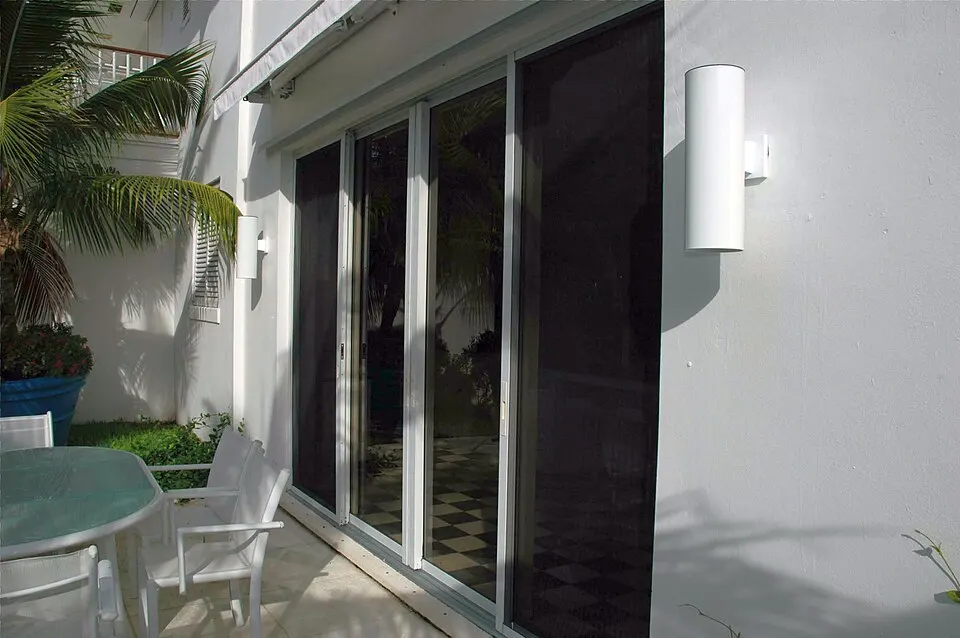
A big glass door can change how a home feels: more light, a wider view, and a living room that spills out onto the lawn or terrace. Aluminium is ideal for these doors because it is strong enough to carry large, heavy glass panels on slim frames. The question is how you want the door to open.
Standard sliding doors
Panels slide past each other on tracks. Nothing swings, so furniture can sit close to the door.
- Options: 2, 3 or 4 tracks; a mesh track for mosquito screens.
- Opens: roughly half the width with two panels, more with three or four tracks.
- Good for: most living rooms and balconies — the best balance of view, cost and simplicity.
Lift-and-slide doors
Turning the handle lifts the sliding panel off its seals onto rollers; it then glides with very little effort, and lowering the handle presses it back down onto the gaskets.
- Why choose it: very large and heavy panels still move with a finger, and the closed door seals much tighter than a standard slider — better against wind, rain and noise.
- Good for: wide openings, villas and hill homes facing strong weather. Costs more than a standard slider.
Slide-and-fold (bi-fold) doors
Panels are hinged together and fold up concertina-style to one or both sides.
- Why choose it: almost the entire opening clears — the closest you can get to removing the wall.
- Keep in mind: more frame lines when closed, and the folded stack needs space at the side, inside or outside.
- Good for: garden rooms, terraces, cafés and restaurants that open up in good weather.
Casement and French doors
Hinged doors, single or double. They seal well and suit traditional elevations, smaller openings and balconies where a sliding track isn’t wanted.
Pivot entrance doors
A large door that rotates on a pivot set in from the edge rather than on side hinges. Mostly used as a statement main entrance.
Details that matter
- Threshold: a low or flush threshold looks clean and is easy to walk over, but in exposed spots it must be paired with proper drainage, a slight fall away from the door and ideally an overhang above.
- Glass: large doors should use toughened or laminated safety glass; double glazing helps with heat and noise. See our guide to window glass.
- Locking: multi-point locks secure the door at several points along its height, not just one.
- Insect mesh: plan for it from the start — a dedicated mesh track or pleated screen is neater than an add-on.
Quick comparison
| Door type | How much opens | Seal | Best for |
|---|---|---|---|
| Sliding | About half (more with 3–4 tracks) | Good | Most homes and balconies |
| Lift-and-slide | About half, very large panels | Excellent | Wide openings, exposed sites |
| Slide-and-fold | Nearly all | Good | Terraces, garden rooms |
| Casement / French | All of the opening | Excellent | Smaller openings, classic looks |